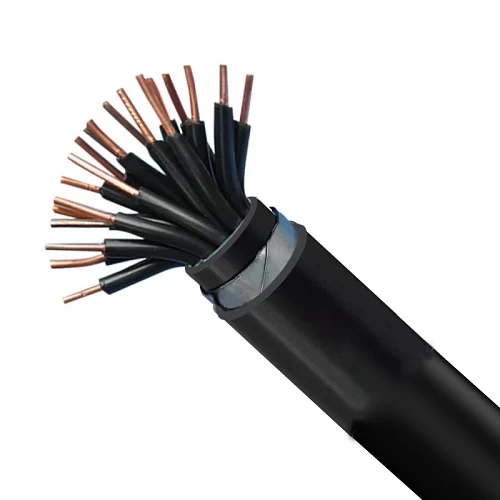
Nine Guilt Free Control Cable Tips
페이지 정보
작성자 Tyree 작성일26-06-17 15:32 조회31회 댓글0건관련링크
본문
 The results reveal that TRPO outperforms different strategies, achieving the bottom root mean sq. (RMS) errors throughout numerous trajectories and exhibiting robustness to larger time intervals between management updates. If you are in search of a companion you can depend on, to construct it right the primary time - on time - you’ve come to the appropriate place! At our manufacturing unit in Dudley, West Midlands, there are extensive engineering design, manufacturing and testing facilities assisted by the latest AutoCAD design software plus an outsourcing facility for sub-meeting and complete contract construct of machines to clients specs. Unlike most mannequin-based mostly management techniques used for this human-robotic interaction task, the proposed control design does not assume knowledge of the anthropometric parameters of the wearer's arm and the payload. To address real-time computational requirements and scalability, we make use of a lightweight state vector parametrization that features only payload states in all six levels of freedom. On this paper, we suggest a novel Nonlinear Model Predictive Control (NMPC) method that enables a team of quadrotors to control a rigid-physique payload in all 6 degrees of freedom via suspended cables.
 Our outcomes show that this configuration is extra workspace-effective than prior designs, and that Residual Reinforcement Learning outperforms FABRIK by three orders of magnitude on positional and orientational accuracy, effecting precise control of the novel 4-section, 8-joint manipulator. Specifically, quaternion-joints scale back the variety of required motors per degree of freedom, paving the way for extra compact this http URL ongoing challenge is that the complexity of the kinematic mannequin of quaternion joints challenges a priori choices on manipulator configurations and imposes greater computational calls for on the control system and its non-linearities amplify all discrepancies between design and physical artifact arising from fabrication imprecision. By defining the catenary curve with 5 degrees of freedom, place in 3-D, orientation in the z-axis, and span, we can drive the 2 quadrotors to trace a given trajectory. First, a joint monitoring controller is designed using a high-achieve robust approach to track desired knee and hip trajectories. Abstract:Significant consideration has been paid to robotic rehabilitation using various varieties of actuator and power transmission.
Particular consideration has been given to robots with verified clinical efficiency in actual rehabilitation settings. The proposed HCDPR can harness the strengths and advantages of serial and cable-pushed parallel robots. However, cable-pushed mechanisms experience a slacking behavior if tension will not be precisely controlled. However, that earlier stage often requires human intervention, and autonomous procedures to locate and attach the thing aren't thought of. The system employs SLAM and object detection methods using knowledge from multi-cameras, event cameras, and IMUs for correct localization and complete environmental mapping. The efficiency of the management system is studied experimentally using a scaled laboratory model of a knuckle boom crane. Abstract:Transporting objects utilizing aerial robots has been extensively studied in the literature. Abstract:On this paper, we present a web based adaptive sturdy control framework for underactuated brachiating robots traversing flexible cables. Abstract:We present the characterization and quality management test of a gigabit cable receiver ASIC prototype, GBCR2, for the ATLAS Inner Tracker pixel detector improve.
On this paper, we describe a number of elements of the design and fabrication of our setup, including part selection and assembly, and present our experimental outcomes. Simulation results affirm the stability, effectivity, and robustness of the ROM, as well as the effectiveness of the controller in regulating cable dynamics beneath a spread of operating conditions. Finally, simulation outcomes verify the efficacy of the proposed technique in managing trajectory monitoring and cable length adjustments effectively. Our method is validated by means of intensive simulation, demonstrating its efficacy in dynamic and useful resource-constrained environments. Further, simulation results present that the efficiency of the AGC controller converges to that of the gravity compensation (GC) controller, demonstrating the efficacy of AGC-based on-line parameter studying. Finally, different case studies are conducted to judge the control performance, and the outcomes show that the controller II can achieve the purpose better. Based on this robotic platform, the objective in this paper is to develop an built-in management system to scale back vibrations and improve the trajectory accuracy and efficiency of the HCDPR, together with deriving kinematic and dynamic equations, proposing solutions for redundancy decision and optimization of stiffness, and developing two motion and vibration management strategies (controllers I and II). For each group, target movements are recognized, and promising designs of CDRRs are analyzed by way of varieties of actuators, controllers and their interactions with people.
댓글목록
등록된 댓글이 없습니다.